Principles of Egress in Access Control: Safety First, Always
When designing access control systems, it is easy to focus on preventing unauthorised access. However, one of the most critical and sometimes misunderstood aspects of access control is egress: the ability for occupants to exit a space safely, quickly, and without obstruction in both normal and emergency conditions.
At Stilo, we consistently emphasise that life safety must always take priority over security. This principle underpins our recommendation of hardware such as the Abloy EL560 or equivalent solutions from Schlage, particularly in environments where controlled access and safe egress must coexist.
Why Free Egress Matters
In any access-controlled door, especially those on escape routes or within protected spaces, occupants must always be able to exit:
- Without specialist knowledge
- Without tools or keys
- With a single, intuitive action
This requirement is not just best practice; it is fundamental to fire and life safety standards. A door that cannot be exited freely in an emergency presents an unacceptable risk.
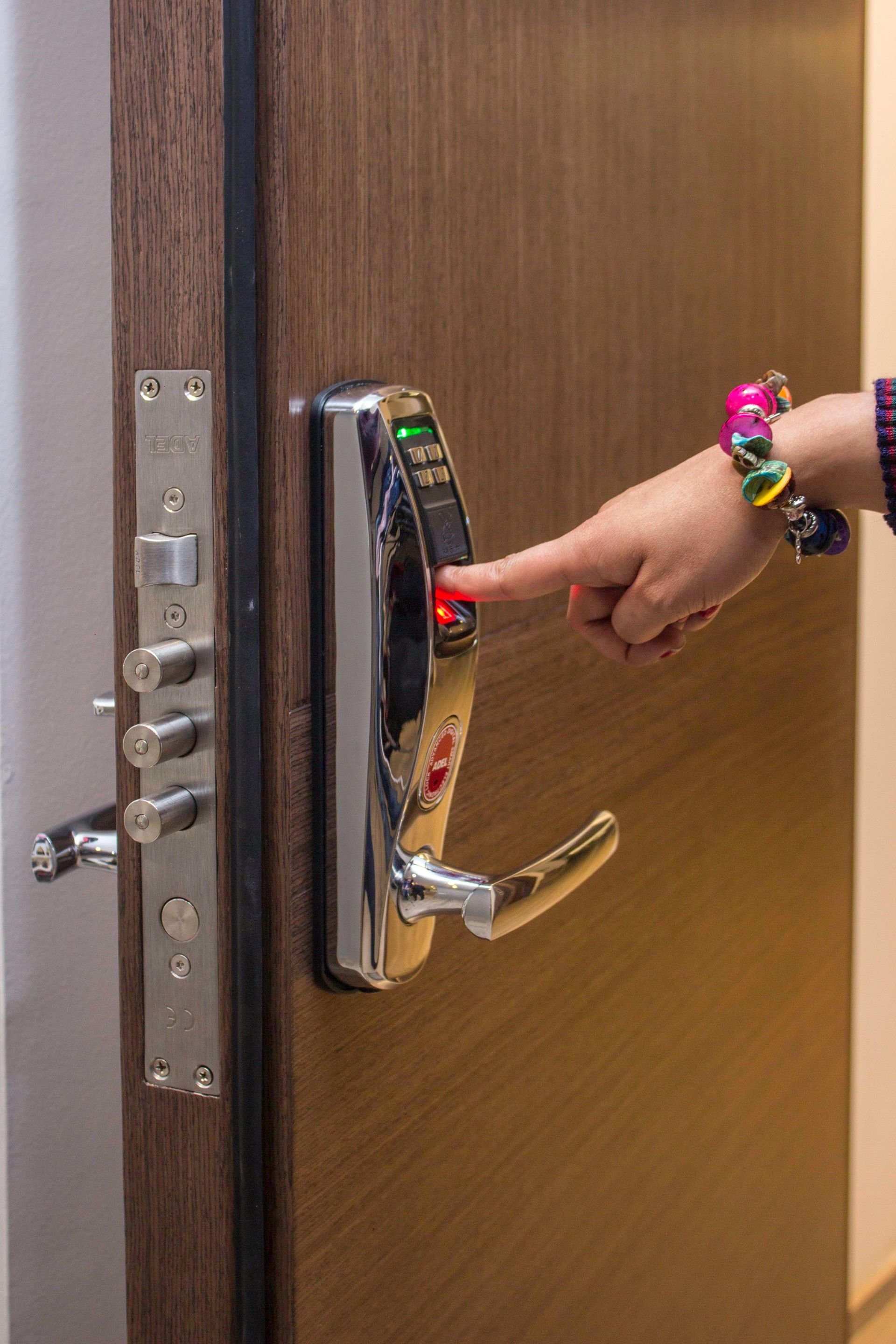
The Abloy EL560 addresses this directly. Although it is an electrically controlled lock, it incorporates a handle that always allows mechanical exit, regardless of power state or system condition.
This ensures that even in the event of power failure or system malfunction, egress is never compromised.
Read-In, Read-Out Without Compromising Safety
At first glance, using a lock that always allows free exit may seem incompatible with a Read-In, Read-Out access control strategy. However, with the correct system design, both security and safety objectives can be achieved.
Stilo commonly implements a solution that includes:
- An audible siren or sounder installed on the secure side of the door
- The door hardware allowing free mechanical exit at all times
- The siren being muted only when a valid badge is presented before door opening
In this configuration:
- A user can always exit safely
- An attempt to exit without badging triggers an audible alert
- Security teams gain visibility of unauthorised or non-compliant exits
This approach maintains free egress while still enforcing behavioural compliance and auditability.
Enforcing Badging: Design Options
Abloy also offers alternative configurations where stronger enforcement of badging is required. For example, the EL560 can be used in tandem with a power-operated shootbolt-style lock.
In such designs:
- The shootbolt engages only when powered
- An emergency break glass unit can be installed to release the door in an emergency
- The primary exit action remains clear and immediate
However, it is critical to stress that fire and emergency doors must always provide a single-action exit.
Any additional locking elements must be carefully assessed to ensure compliance with fire regulations and life safety standards.
Engage Expertise Early
Access control is not just about hardware selection. The correct operation of a door depends on:
- The door’s role within the building
- Fire and escape requirements
- User behaviour
- System integration and fail-safe operation
Poorly designed access-controlled doors can introduce serious safety risks. For this reason, Stilo strongly recommends engaging an experienced access control specialist early in the design process to ensure that security never undermines safety.
Safety Above All
Ultimately, the goal of access control is to protect people as much as property.
By selecting hardware such as the Abloy EL560 or Schlage solutions, and by designing systems that respect the principles of egress, organisations can achieve robust security without ever compromising occupant safety.
If you are planning or reviewing an access-controlled door, ensure that safety is the first question asked, not the last.